

From Everyday Drinking: People in Dallas Don’t Drink What We Drink.
What wine lists in Big D, Robert Parker, selling Prosecco in China, and an analysis of 172,000 wine listings taught me about how taste is made.


Here’s yet another wine writer taking Robert Parker’s name in vain.
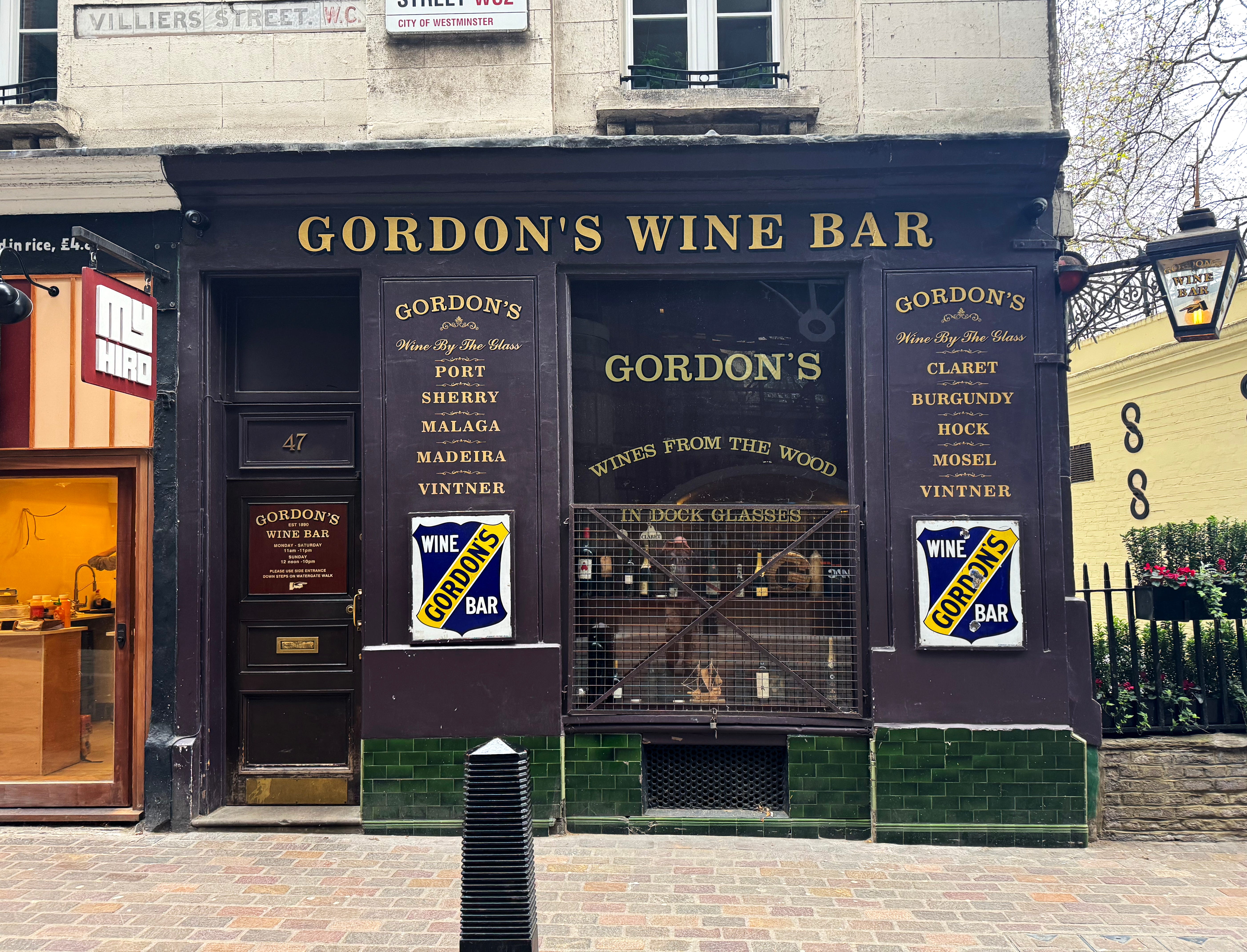
In my second piece for Everyday Drinking, I explore the question of taste: how much of what we like is truly our own, and how much has been shaped by critics, restaurateurs, importers, geography, taxation, and the bottles we’re offered in the first place? Along the way, we encounter Dallas steakhouses, London wine bars, Immanuel Kant, and, inevitably, Robert Parker.
Also, I would like to thank WineLabs for providing the data that made this analysis possible.
*
A trendy Barolo grower who had just returned from a work trip to the US told me that “people in Dallas don’t drink what we drink.” Their tastes are different, he said, they want different wines. From what he had observed, Americans gravitated towards richer, more powerful wines with riper fruit, while the lighter, more savory expressions prized in Europe were largely absent.
Beyond the obvious observation that restaurant wine lists differ from place to place, what intrigues me is the idea that taste is somehow of a place: that people develop preferences so deeply rooted in culture that they become difficult to translate across borders. A bit like the butter-versus-olive-oil divide: you are either an olive oil person or a butter person. Or, worse still, a margarine person. We tend to speak of such preferences as though they were innate rather than acquired.
His assertion also seemed straightforward enough to test. With WineLabs, I analyzed more than 172,000 wine listings from 501 restaurants and wine bars in Dallas and 1,310 venues in London.
At first glance, comparing Dallas with London may seem unfair. But I wanted to avoid skewing the results by choosing a wine-producing capital such as Paris or Milan, where domestic wines would naturally dominate restaurant lists. London, by contrast, combines an unusually international wine trade with comparatively limited domestic production, making it a more neutral benchmark against which to assess whether tastes really do differ across cultures.
According to the data, my Barolo-producing friend isn’t wrong.
In its restaurants and wine bars, Dallas serves wines with average alcohol levels around one percentage point higher than those in London (14.9 percent versus 13.8 percent ABV). The difference is driven almost entirely by the cities’ red wine selections. Nearly 60 percent of the wines on offer in Dallas are red, compared with less than half in London. Meanwhile, London offers a greater share of sparkling and dessert wines.
London is resolutely Old World: nearly 70 percent of the wines listed originate from France, Italy, and Spain. Dallas, by contrast, looks westward, with wines from California accounting for around 23 percent of all listings. French wines alone make up 46 percent of London’s wine lists, while Dallas offers a broader mix of New World regions, including Oregon, Mendoza, Marlborough, and Washington State. The difference is equally evident at the regional level. Burgundy and the Loire Valley feature prominently in London, whereas Napa Valley occupies a much larger place on Dallas wine lists.
Interestingly, Italian wines feature prominently in both cities, although preferences diverge at the regional level. London appears to favor Piedmont, home to Barolo and Barbaresco, whereas Dallas shows a stronger preference for Tuscany and Veneto.
The average London wine list spans seven countries and 20 regions, while Dallas typically draws from just four countries and 10 regions. The two cities also diverge sharply in their red wine preferences: cabernet sauvignon and Bordeaux blends account for 35 percent of the red wines offered in Dallas, compared with just 18 percent in London, where pinot noir reigns supreme. White wines, however, reveal an unexpected point of agreement. Chardonnay dominates in both cities, accounting for roughly 30 percent of their selections. Sparkling wines once again expose the divide, with London favoring traditional-method Champagne and Dallas showing a stronger preference for Prosecco.
For the German philosopher Immanuel Kant, judgments of taste rest on a paradox. Taste is subjective, grounded in feelings of pleasure or displeasure rather than objective truths. Yet judgments of taste also claim universal validity. When we describe something as beautiful, we do not simply state a preference; we imply that others ought to see it that way too.
We Europeans like to think that taste is our birthright, dismissing any departure from them as a failure of taste itself. When it comes to the creation of luxury goods, for instance, it is true that Western Europe dominates. France, Italy, and Switzerland produce more than 60 percent of the world’s personal luxury goods by value. With wine, Italy, France, and Spain account for around half of global production. This only reinforces the prejudice of European taste, though quantifying it is difficult because no universally accepted definition exists.
Yet while luxury goods are still largely produced in Europe, the market for them is global. Asia accounts for roughly a third of luxury purchases, North America for another third. Europe represents around only a quarter of consumption, although many of those purchases are made by tourists rather than local consumers.
In a recent piece for Bon Appétit, Maryam Ahmed argued that American wine drinkers are offered too many of the same wines—often ones that are rarely local. It is an observation I have made about Michelin-starred restaurants too. Ahmed exhorts consumers to take control and choose local wines instead.
But how much control do consumers actually have? If I walk into a restaurant, I can only choose from what is on the wine list. The act of choosing is constrained by the options that have already been selected for me. So, are wine lists reflecting or shaping demand?
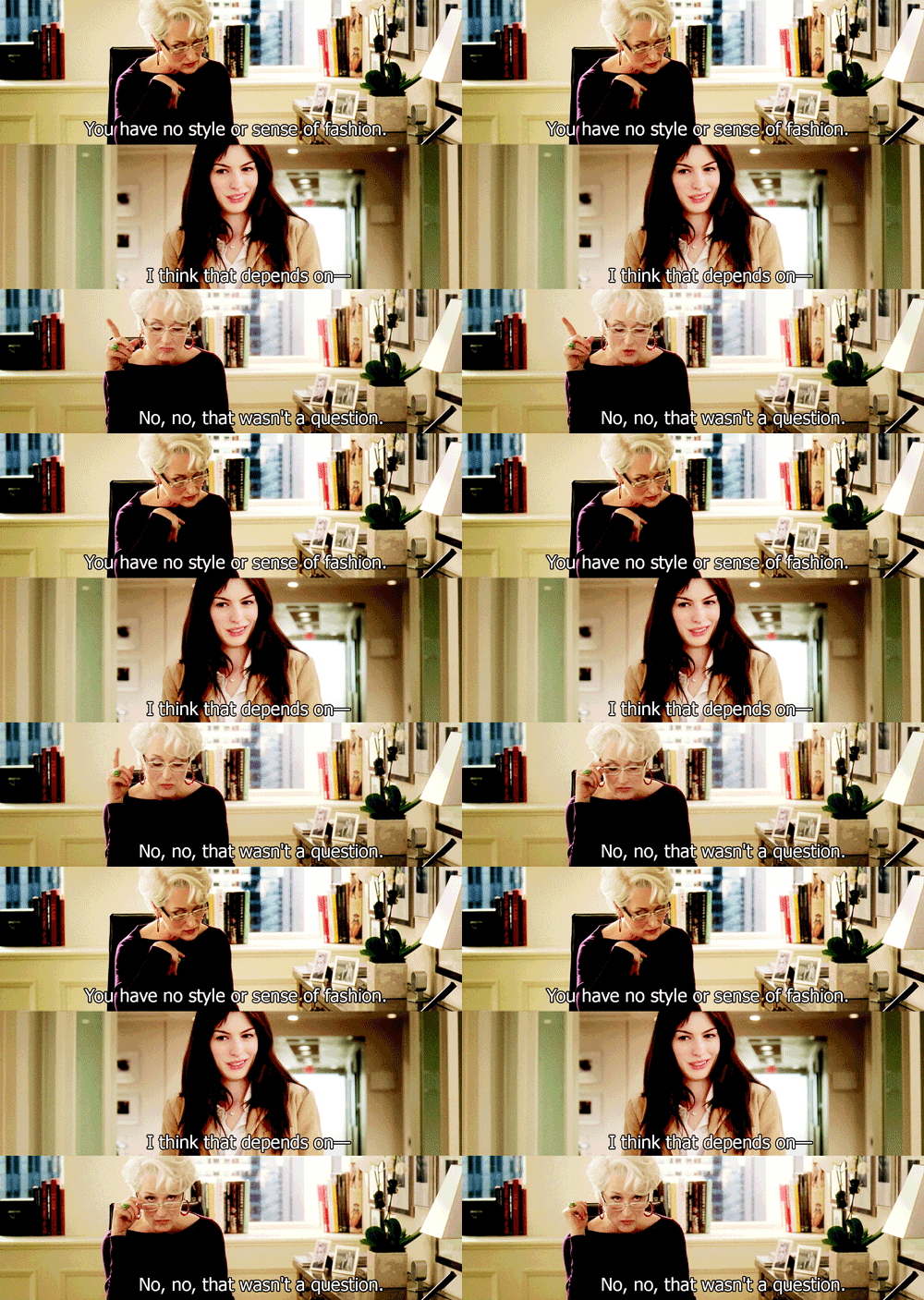
If you’ve seen the first Devil Wears Prada, you’ll remember the scene in which Miranda Priestly—the editor-in-chief of Runway, a thinly veiled version of Anna Wintour at Vogue—scolds her new, unfashionable assistant for mocking a discussion about two belts that appeared to her almost identical. Miranda’s point is that even the assistant’s tragic choice of a blue sweater is the result of decisionsmade by a handful of influential people in fashion. Taste, she argues, is shaped by the few tastemakers in that very room.
If Anna Wintour had a counterpart in the wine world, it was Robert Parker. Perhaps the most influential wine critic in recent history, I needn’t tell you what a “Parkerized” wine tastes like. Suffice it to say that it tastes almost exactly the opposite of what we traditionally think an Old World wine should taste like. Yet, for all the complaints that European winemakers supposedly have for him, it’s hard to deny that many of them catered to his palate in pursuit of a coveted 100-point score, or something close to it, and the economic gains that came with it. Which means that one wine critic helped shape both the supply of wine and the demand for it according to his personal taste.
This is precisely what the WSET teaches students to avoid. The aim is to assess whether a wine is good or outstanding on its own terms, rather than according to whether you happen to enjoy it. It is an exercise that irritates me every time I do it. Perhaps that is because—despite, once upon a time, knowing very little about wine—I rather recklessly set up a business selling it and simply chose bottles I liked drinking. I had little interest in abstract quality assessments divorced from my own pleasure—my own idea of what made a wine good. In that sense, I empathize with Parker. He scored wines according to his conception of good taste.
The problem was not that Parker had preferences but that his preferences carried such extraordinary weight that they moved markets. Producers adapted their wines to suit his palate, while those that did not align with it were overlooked. One man’s taste became, for a time, the market’s definition of quality.
Which brings me to this question: Did Robert Parker like big, bold, jammy wines because he is American, or did Americans come to like big, bold, jammy wines because Robert Parker said they should?
When I first started exploring the Chinese wine market in 2018, there was a clear idea of what “Chinese people liked” when it came to wine: big Bordeaux reds. And that’s what was imported and sold. I once brought a Prosecco to a tasting with a group of Chinese importers in Guangzhou. They all agreed it was a good wine, but insisted that nobody would buy it. “Chinese people don’t drink sparkling wine,” they told me.
“What do you mean?!” I asked. Prosecco is the most popular wine appellation in the world, bar none (660 million bottles sold versus 500 million of Bordeaux). Were Chinese people somehow immune to its charm? I didn’t think so. So I imported it myself and sold it online and quickly became our best-selling wine. Today, Vino Joy reports that sparkling wine sales in China are growing at double-digit rates while sales for still wine are falling.
Now, I’m not telling you this because I want to take credit for the boom of sparkling wine in China. Rather, to illustrate how quickly supposedly fixed preferences can change. And if anything, what changed perceptions was a major Champagne marketing push between 2020 and 2022. I know because every influencer we worked with seemed to be invited to lavish hotel stays and caviar-and-Champagne dinners.
Again, taste isn’t fixed, it can be changed. With the right amount of marketing budget, that is.
That even Kant’s attempt to reconcile the paradox of taste remains contested is, in a way, reassuring. This piece is an argument against the idea that preferences are immutable; that people in London are fundamentally different from those in Dallas; or that today’s wine lists merely reflect what consumers have always wanted.
Perhaps people in Dallas would happily embrace lighter, lower-alcohol whites, just as Londoners might develop a taste for higher-alcohol cabernet sauvignon. But that requires people willing to challenge convention. Critics, importers, restaurateurs and retailers do more than respond to taste: they create it.
It has to be said that, while Dallas appears to have different tastes in wine, geography and price may explain much of the apparent gap.
London’s proximity to northern France means French wines reach British shores more easily than they do Dallas, where bottles must cross an ocean and navigate a complex supply chain, often at a significantly higher cost. As ever, choices ultimately come down to price—or rather, value for money. The median bottle on a Dallas wine list costs $36, compared with $86 in London.
Supporting this argument, rather than the idea that Dallas simply has a preference for warm-climate wines, is the city’s emphasis on other cool-climate regions, such as Oregon and Washington. These wines feature prominently on Dallas wine lists but are largely absent from London’s—or perhaps simply drowned out in a sea of French choices.
London’s apparent preference for lighter wines may also reflect policy rather than taste. In the UK, alcohol duties are linked to alcohol by volume (ABV), creating a financial incentive for restaurants to stock lower-alcohol wines.
The occasion on which wine is consumed may also play a role. Dallas has a strong tradition of steakhouse dining and casual upscale restaurants, where wine is expected to complement richer, meat-based dishes. The popularity of cabernet sauvignon in Dallas may therefore say less about a city’s willingness to experiment and more about the role wine is expected to play at the table.
In other words, wine lists may reflect not only what people like to drink, but also the occasions on which they drink it.
Perhaps the real lesson is that wine lists reveal less about what people inherently like and more about the choices available to them. Taste is shaped not only by culture and preference, but also geography, taxation, economics and social ritual. Which city has “better” taste depends, perhaps, on whether one believes taste correlates with price. But the more interesting question is not whether London or Dallas has better taste, but how different systems produce different expressions of it.