

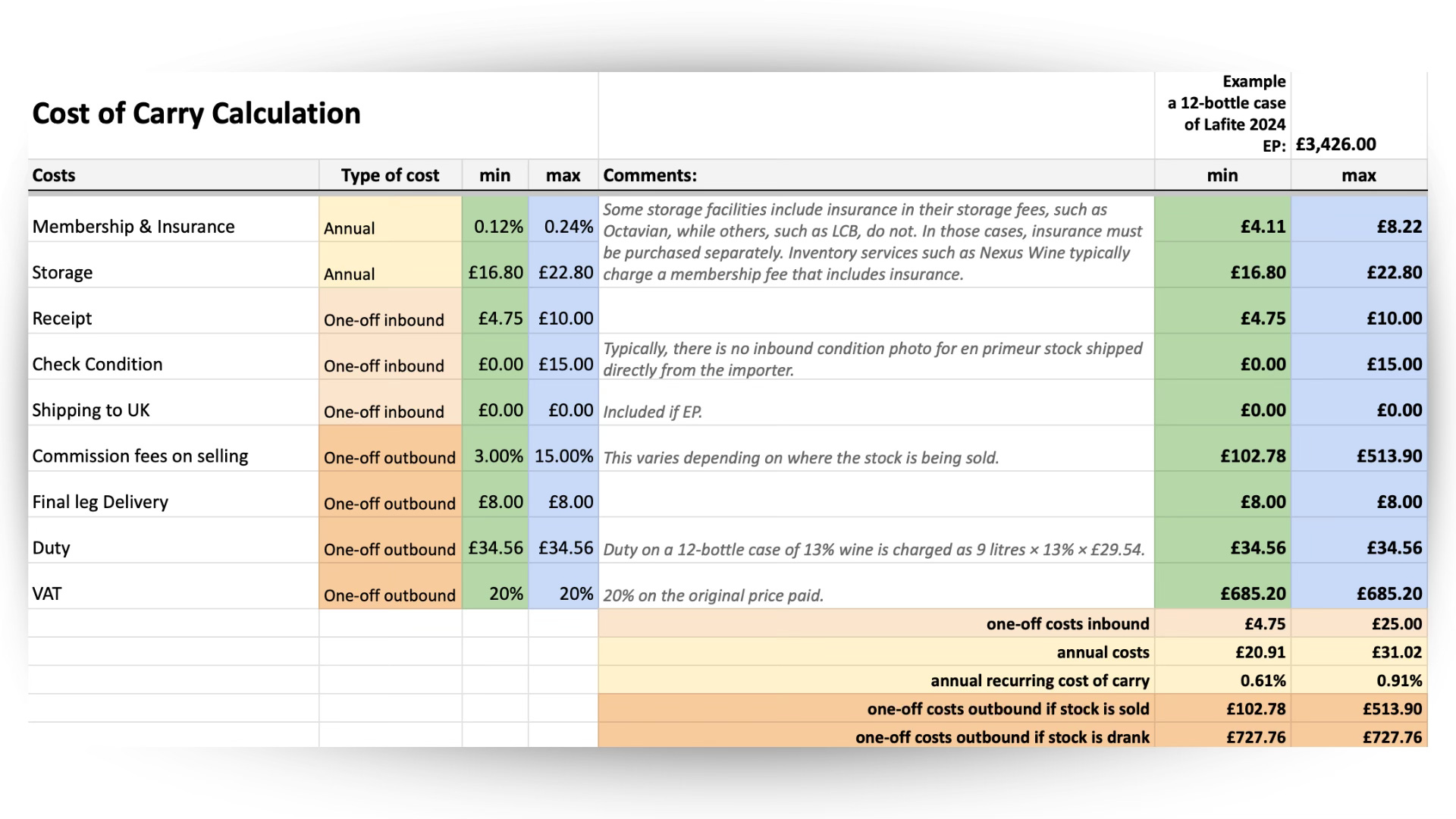
(Premium Only) Step-by-Step Calculations Behind the Tax on Patience
Why a £3,426 case of Lafite really costs £6,500

If we want to support wines that can age, if we want to sustain a culture of ageing fine wine, we need to start being clear, very clear, about what that actually costs.
The release price is only the part of the cost equation.
By the time a wine has been properly carried for, say, ten years, the total cost can be close to twice the original purchase price.
That is because the purchase price of a wine is not its full cost of ownership. You also need to factor in the cost of “carrying” the wine until you sell it or drink it 5, 10, 20… years later.
What are these costs?
Wine is a physical asset, which means it has to be stored, insured, and financed. Its physicality is part of its essence and good storage and time can improve wine in a way it simply can’t improve a house or a bond.
And that physicality comes with a cost.
In particular:
delivery from the en primeur source to bonded storage and receipt
annual storage cost
annual insurance cost
annual opportunity cost
And then, if the wine is eventually taken out of bond for drinking:
final delivery leg
duty and VAT
Or, if the wine is sold:
sales commissions
Some of these are ongoing annual costs. Others are one-off charges. Let’s break them down.
Keep reading with a 7-day free trial
Subscribe to In the mood for wine to keep reading this post and get 7 days of free access to the full post archives.